Wednesday, April 28, 2021

A New Type of Relationship Status: What is Your Status With Technology?

As I wake up each morning to the sound of my alarm, I do not think about how fascinating it is that just fourteen years ago, iPhones were not even on the market. Carrying out my daily routine, I prepare for lacrosse practice by checking the weather using multiple apps on my phone, filling out my wellness questions regarding my sleep and soreness, and answering the Arms Software form as a health screening implemented because of the pandemic. When I get in my car to drive to Vert Stadium, I connect my phone through bluetooth technology and play my favorite pump-up songs to get in my zone and “like” my coach’s message in the Groupme app saying that film will be in the locker room to start off practice for the morning. After practice I catch up on my emails, fill out my online rate of perceived exertion form answering questions about my exertion level that day on the field, text my athletic trainer for a time to come in for treatment to relieve my back pain, and fill out the University’s daily wellness questionnaire. All before 10 am on a typical day, I use my phone in a wide variety of ways and many of which assess and track my daily wellbeing. All without being aware of the extent of my reliance on technology.


This relationship I have with technology has become one of necessity because so many requirements I have to meet each day or correspondences I have with others depend on using my device to send information efficiently. Unlike most young adults in my age demographic however, I actively limit my daily use of social media and the number of social media platforms I use at one time. Though I like to stay connected with friends across the world which has been very easy with the ability to check anyone’s social media account in a matter of seconds, I have found the people I am closest with will reach out via text or a phone call regardless of the physical distance between us. So even though I use different media platforms to stay connected with others, the primary role of media and technology as a whole in my life is its use for daily tasks and academic or professional correspondence. I am very selective of the social media platforms I create a profile on, and have never made accounts on many popular social media such as TikTok or Vine even when that source may be considered “all the rage”. My visits to my Facebook and Twitter pages are very rare and I hardly ever post on Instagram or Snapchat which are all private accounts anyway. With these precautions I have taken to protect my identity and information, I would say my digital footprint is a clean one. 


πŸ”For more information on how to protect your digital footprint, this article from Allstate  πŸ”

 Identity Protection provides great step-by-step actions you can take!

https://blog.infoarmor.com/individuals-and-families/whats-digital-footprint-why-does-it-matter-tips-protecting-data  


My parents raised me to be very mindful of the content I share on the internet and my lacrosse coaches are always checking our team’s social media accounts for content that could be considered inappropriate for any reason big or small. With emphasis on the care I should take in protecting my digital footprint coming from many areas of my life, I have never attempted to share something that could paint a negative image of me in the slightest. In this way, I have come to despise many aspects of social media because now, schools and companies can discipline students and employees for their actions on social media. Every time technology and social media become more intertwined in how we function daily, the distinction between who we are in person and who we are on the internet can become more blurred. While technology has the potential to serve as a platform where people can promote their perspectives, technology also has the potential to enable people to portray a different or inaccurate depiction of themselves. Where one picture with an innocent cup in the background has been seen in recent years to cause termination in the workplace or from collegiate teams and ruin the digital footprint by harming someone’s character, a picture could also spread a positive message to millions, and even impact someone’s life. With these consequences in mind, I have found value in finding a balance between maintaining professionalism on social media in the instance a future potential employer decides to peruse my digital footprint and staying connected with distant friends and family who look to my social media platforms as a way to keep up with my activities and accomplishments.


https://www.nytimes.com/2021/01/29/learning/should-schools-be-able-to-discipline-students-for-what-they-say-on-social-media.html


From, The New York Times, this article provides an example from January ⥢ 

this year, when a high school cheerleader faced punishments from her school because of her actions on the internet


My online presence because of my caution with my activity and posts online is a very professional image. When searching my name on Google, you will likely find several articles about my involvement with lacrosse both in high school and today, along with my successes in Varsity golf, my LinkedIn or Facebook profile, and maybe even a few highlight videos from 2017 on Youtube. Though this footprint can be categorized as a positive reflection of who I am, I am still astonished at the amount of information anyone could learn about me by simply typing my first and last name into a search engine. In this way, technology has made evaluating candidates for a job, admissions acceptance, and recruitment much easier because the field of candidates can be narrowed down in a matter of minutes depending on that candidate's digital footprint. 


I like to consider the saying “everything in moderation” when contemplating my activity on social media and my overall use of technology. Like any challenge we are faced with in life, technology presents many benefits while also creating many new obstacles users are presented with. Oftentimes we make rash decisions in the heat of a moment whether it be out of happiness or anger, forgetting the lasting impact one post can have and the permanence online actions carry. Technology gives the opportunity for an ordinary person to become an overnight sensation, influencer, or celebrity; but there is also the risk of becoming exposed to the world for an offensive comment that surfaces from years ago when Facebook was first launched. Both of these scenarios have frequented the media as awareness of the internet’s permanence increases which I have seen makes people more aware, mindful, and conscious of the effect a post could have. I have also seen people become more strategic by using popular social media platforms for fundraising by using the technology Venmo to easily donate small sums of money and even politely and directly request donations from connections through Venmo. The pandemic has especially inspired such creativity to replace events that could not be held safely and still be successful. 


Bingo Boards like the example to the left have been a common way non-profits, sororities, and athletic teams advertise their cause and raise money for the cause. During my lacrosse team’s fundraising efforts for the organization we work with closely, Friends of Jaclyn, I posted this Bingo board on my instagram and received many Venmo donations, exceeding my fundraising goal. This method was efficient because the post was able to reach over 800 of my Instagram followers within 24 hours. With less than half of that number of contacts in my phone, I never would have been able to support the cause with generous donations, or spread awareness of the organization's mission to as many people as I did by using technology.


In moderation, the use of technology can foster creativity amongst the young, reliant generations to develop new solutions to problems the preceding generations were dealt. In excess, the use of technology could lead to further increase of mental illnesses stemming from social pressures, cyberbullying, and the lack of social skills seen in younger generations. As technology continues to develop, we must also develop the way we teach people to use social media. For successful verbal communicators in the future, we must instill the value of limiting daily use of technology to ensure technology's use benefits our society instead of becoming a hindrance.


Wednesday, March 3, 2021

First Amendment

    Found expressly in the Constitution, our First Amendment rights are some of the strongest fundamental personal rights we have and while First Amendment protection is not absolute nor does it serve as a shield against laws of general applicability, it is important to preserve the idea of free speech in every aspect of our lives. With the growing popularity of using social media platforms to voice political views, the topic of free speech or expression on platforms such as Twitter, Facebook, Youtube, or Tik Tok has frequented headlines of news media. 

    The struggle advocates of free expression on social media are facing is based on the State Action Doctrine establishing that without government involvement, no constitutional claim can be made of a violation of First Amendment Rights because only the government can violate constitutional rights, so the First Amendment does not apply to private actors. Therefore, if a social media company decides to censor or ban a user from their platform, it has authority to do so without violating an individual's foundational right to free speech. 

    Though there has not been a violation of Constitutional rights found in censorship, it is interesting to consider why platforms like Twitter have chosen to silence, at the time, the President of the United States, and not the Chinese Communist party. I find even more curiosity in forming an answer to why media outlets and journalists in particular, are pushing for more censorship causing a herd mentality on several  censored platforms. Is the purpose of journalism not to voice all opinions and express all sides of stories journalists release? With this question in mind, I cannot seem to understand why journalists would want some people in the industry to be silenced for their views and others to have free expression without consequence.   


    πŸ’₯Research from the Pew Research Center provides an interesting study which πŸ’₯ shows the difference between the people's political views and whether or not they feel their views have been censored by social media outlets. You can find this data in the link below!

https://www.pewresearch.org/internet/2020/08/19/most-americans-think-social-media-sites-censor-political-viewpoints/


    For another look into the censorship of social media platforms, the Freedom Forum Institute has created a detailed scale, ranking several social media sites on their censorship from low to high depending on categories or types of censorship. When it came to "misinformation" commonly referred to as "fake news", Youtube and Twitter had the highest levels of censorship.  


The U.S. Supreme Court

     Since 1789, the United States Supreme Court has transformed its role in legislation by interpreting the constitution and creating precedent with each decision the justices come to. The Supreme Court's specific power was established after its creation in 1803 when the Marshall Court was faced with the case Marbury v Madison. Their decision in this case was a turning point in history, because the Supreme Court used the principle of checks and balances to rule Madison's demand for SCOTUS as unconstitutional, and struck down the Judiciary Act of 1789 as unconstitutional for "extend[ing] the Court’s original jurisdiction beyond that which Article III, Section 2, established" according to the case's summary on Oyez. 


πŸ“Œ To see more details regarding Marbury v Madison, its Oyez summary is a great source πŸ“Œ 

https://www.oyez.org/cases/1789-1850/5us137


    This case built the framework for the Supreme Court's present day purpose because it established Judicial Review as the court's power to deem all actions of parts of government and laws constitutional or not. Since Marbury v Madison, the Supreme Court has used judicial review to come to decisions on new cases concerning the constitutionality of actions the government has taken and set new precedents that impact future application of the constitution to those cases. 

    The Supreme court holds a very prestigious reputation because they are the final say in matters that progress to their level of jurisdiction. What the Supreme Court decides remains as that interpretation of the Constitution until another similar case is brought up through the court system or until congress passes a new law because SCOTUS usually acts with stare decisis. This principle means that once the Supreme Court makes a precedent, they do not want to stray from it to maintain consistency and stability throughout the nation. So, one decision can impact years of prosecution at the lower court level and lawmaking at the local, state, and federal levels. Such combination of precedent and stare decisis has been defined as judicial restraint meaning the Supreme Court chooses to show slow or no change at all in their interpretations of the Constitution. 

    Though many scholars argue for the Supreme Court to use Judicial Activism to create rapid change in law or overturn past precedent, it is important to consider the consequences such sweeping change could have. Our Constitution was intended to provide a stable and lasting government which would be threatened by too much inconsistency in law making and enforcement. It is within the power of Congress to carry the role of creating laws, which can be used to spark more rapid change, whereas the Supreme Court creates precedent case by case. 


πŸ“Œ For more detail on the functions of the United States Supreme Court, this article from πŸ“Œ

History.com is a great source. 

https://www.history.com/topics/us-government/supreme-court-facts  


Monday, March 1, 2021

The Illusory Truth Effect

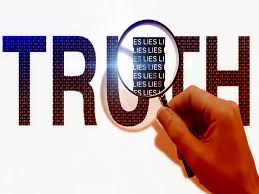
    The Illusory Truth Effect is a phenomena we encounter every day whether we are aware of its influence over us or not. The effect happens through repetition, and is explained in an article by Psychology Today as "repeating a statement increases the belief that it’s true even when the statement is actually false"(Pierre, 2020). Such repetition of information increases the target audience's familiarity of the statement, and ultimately leads those people to believing what they are told. In a world where advertising bombards us on every media platform in existence, the Illusory Truth Effect is something everyone should be conscious of before putting their full faith into any piece of information posted on the internet. 

     Often unaware of the Illusory Effect's power over consumers, companies use the phenomena to their advantage as a marketing strategy. Catchy slogan's such as "Subway: Eat Fresh" or "M&M: Melts in Your Mouth" are just a few prominent examples of widely known slogans used by Subway and M&M because of their repetition on television commercials or other advertisements. Our learned association with Subway's ingredients being fresh, as we are told in their ad, has influenced thousands of consumers that their ingredients must be in fact, fresh. However, after being exposed in 2014, Subway announced they would be removing a certain chemical which was used in their bread. The same chemical used to make styrofoam, shoe soles, and yoga mats. Perhaps Subway isn't as fresh as they have claimed for years, but the slogan has been engrained in the minds of so many that it is hard for people even with prior knowledge of their faults to erase their slogan's permanent mark.  

❗For a closer look into Subway's exposure, check out the article below❗

https://abcnews.go.com/Health/subway-takes-chemical-sandwich-bread-protest/story?id=22373414#:~:text=Feb.,signatures%20in%20a%20petition%20drive. 


       The Illusory Truth Effect is used in other aspects of our lives, especially in the realm of politics. Political campaigns are centered around a candidates appeal to the public, so their primary campaign platforms and slogans are repeated over the course of a campaign trail, to familiarize voters with their promises made to the people. By reaching targeted demographics of potential voters, slogans such as "Make America Great Again" and "Build Back Better" are repeated on social media platforms, at rallies, on merchandise, and in speeches to familiarize viewers with the platform. In the heat of political debates, those slogans are commonly used by candidates supporters who the slogans resonate with to defend their candidate of choice and provide reason for their support. 


    A more concerning aspect of the Illusory Truth Effect theory is that even when we hear information repeatedly from unreliable sources or false information altogether, we are still influenced into believing its truth because of our gained familiarity with the information. This may even cause us to discount new information, which may be true, which is also mentioned in the article above from Psychology Today. Even more shockingly, the Illusory truth effect impacts people most when someone perceives themselves to be knowledgeable of the topic OR even if the someone hearing the information has prior knowledge that that information is false. With this in mind, it is even more important for new information to spark skepticism in our thought process before placing trust into random online resources. 

           ❗For further insight into the use of political propaganda using the Illusory Truth Effect,                                                                 read this article from Psychology Today

https://www.psychologytoday.com/us/blog/psych-unseen/202001/illusory-truth-lies-and-political-propaganda-part-1


    As you continue surrounding yourself with a tremendous amount of advertising and online influencing, I want to pose a challenge. Next time you see a claim made from an apposing viewpoint of your political beliefs, health ideologies, or even religious values, dig deeper into finding statistics or studies to provide more information before re-affirming your own thoughts. If we take that step, perhaps we will find more common ground amongst dividing topics in our nation. Maybe we will even discover for ourselves that we have fallen victim time and time again, to the clever sloganeering used by every successful marketing strategist in history. 


Tuesday, February 23, 2021

Audio Technology Through the Decades

     From carrier pigeons to bluetooth, audio communication technology has never ceased to improve. Significant developments in communication devices were especially seen during periods of wartime when morse code became a prominent form of sending messages to and from distant locations quickly and securely during World War II. 


    A later wartime advancement was seen during the World War II time period as well through radio broadcast which surged in popularity as citizens listened, eager to learn what events were developing and how the nation was doing overseas. Even after the end of the war, there was a growing interest in radio broadcasts because of its entertainment qualities. 

    Though the radio show business saw a decline as other forms of spreading news entertainment surfaced like television and now social media platforms making earlier inventions such as the VCR and cassettes  

Eight Values of Free Expression


       Being able to freely express our thoughts, as I am in this post, is a right I value deeply as an aspiring journalist. Several speech theories such as "The Marketplace of Ideas" and many other time-tested concepts can help to understand how our expression works in a world where we can type our thoughts in a matter of seconds to share with people around the world and place value in expressions of our own free speech. By learning how aspects of theories of speech help to shape your own identity, it can allow you to incite ideas in others, spark larger change, or even prompt change in government. 

One theory I find particularly relevant that addresses “cancel culture” in our society is Steve Shiffrin’s idea of protecting dissent. This idea addresses how our nation’s values of free speech is not intended to be run by mob rule. While we value a majority rule in law making and voting, it is important that minority views are not silenced. Whether a company is voting on new business endeavors or candidates are debating their viewpoints during election year, the idea of majority rule and minority rights is a controversial topic in the media. 
When former President, Donald Trump was permanently banned from the social media platform, Twitter, the company released a blog explaining their reasoning behind their decision. In the interest of public safety, Twitter claims that his account was used to incite violence which violated their terms of use agreements.

→ Read this blog post by accessing the link below ←
https://blog.twitter.com/en_us/topics/company/2020/suspension.html 

In opposition to Congress’s actions prior to Trump’s transition out of office, he had tweeted addressing his followers that their voices could have a voice in the future for their conservative viewpoints. Twitter states their interpretation of his tweet as being an incitement of violence because days after the post, hundreds of his supporters stormed the U.S. Capitol while Congress was in session. 
       
        While Twitter’s decision to permanently ban Trump’s twitter account does not violate his First Amendment rights since the government was not the entity who restricted his speech, this silencing should draw concern from citizens of the “free world” no matter what political stance we have. If Twitter has the power to silence any user who has millions of active followers, they have the authority to silence anyone who’s voice violates their interpretation of terms and agreements.  

→ Check out this website to see data on Trump’s Twitter account ←
https://www.socialbakers.com/statistics/twitter/profiles/detail/25073877-realdonaldtrump

Trump’s loss in the 2020 election shows the current political climate in our nation and that his views may not be the majority’s, but should that mean his opinions and others in agreement with his positions on political topics should not be heard? Referring back to the idea of Protecting Dissent, it is more important than ever to hold companies like Twitter accountable for abandoning principles of free speech that our inclusive melting pot of a nation was founded upon. Since a small number of companies own every news media outlet, and the prominence of a few social media platforms reduces the likeness of new platforms emerging, silencing of minority opinion happens more often than we know. Tediously developed algorithms and other tactics used especially by social media platforms can hinder our ability to see information contrary to the views of our frequently accessed sources which poses a threat to our ability to speak freely and without fear of being “canceled” for your speech: because at any point in time, your voice could be the next to be silenced.

Antiwar Voices


    For a nation like the United States, going to war carries many other meanings besides just battling to resolve a conflict. As a nation who has taken on the role of peacekeepers of the world, war means money, resources, and maintaining unity throughout the nation's citizens. The mainstream media has a role in projecting a sense of unity across the United States to create a sense of unity as one nation rising up as one to defeat threats to our freedom. Expressing these ideas is an important use of the Free Speech protected by the First Amendment during wartime when encouragement and information need to reach a large audience quickly. However, in the midst of unifying messages to gain public support during wartime, there are also voices of opposition which are often silenced. 

    When the United States formally entered World War I, in 1917, it became a priority to protect the interest of national security at a great cost.  Despite a great deal of opposition for going to war and the United States' prior position of neutrality in the beginning of the European powers' aggression with each other, an American ship sunk by Germany prompted further U.S. engagement in the war. With the death of over one hundred Americans at the hands of the Germans, President Woodrow Wilson acted. At this point, America's fight to protect our freedoms and fight socialism was a primary focus in the media and caused much controversy at home in the U.S.. 


★ This article from History.com provides great detail ★

of the process taken by the U.S. to formally enter war, and what prompted the action to be taken

https://www.history.com/this-day-in-history/america-enters-world-war-i   


    At the start of U.S. involvement in World War I, citizens gathered peaceably in many major cities throughout the country to voice their concerns for entering war and journalists used their voices through publication, but these antiwar voices were put down in many ways. In particular, one pivotal Supreme Court case brings attention to the balance of First Amendment protection and national security. In a series of leaflets published by Charles Schenck and Elizabeth Baer, they expressed views “that the draft violated the Thirteenth Amendment prohibition against involuntary servitude” as explained in the case’s Oyez summary. 

    Two years prior to the release of these leaflets, Espionage Act was passed which punished government workers who spoke out against the government, and was aimed at punishing people specifically during the years of World War I. In addition to the Espionage Act, the Sedition Act was also passed to punish private people who spoke out against the government and involvement in World War I.The very first statement of the First Amendment clearly states that “Congress shall make no law...abridging the freedom of speech or of the press”, which is alarming congress was able to do so in the first place. Though the Sedition Act was repealed in 1921, its initial passing calls the very foundations of our government into question, and while the leaflets were released as propaganda by socialist party supporters, their free speech expressed valid points of the draft’s violation of rights also protected by the Constitution.

    Regardless of the Supreme Court’s tedious contemplation of whether or not Schenck and Baer’s journalism was a threat to national security and if the Espionage Act violated the First Amendment, the case set an important precedent for future cases involving these convictions. The Supreme Court’s “Clear and Present Danger” Test was created, establishing according to the case’s decision that “the First Amendment does not protect speech that approaches creating a clear and present danger of a significant evil that Congress has power to prevent”. 

★ For a closer look into the details of Schenck v. United States, ★

this user-friendly article by Oyez is an excellent source!

https://www.oyez.org/cases/1900-1940/249us47 


    Each time a case is brought up to the Supreme Court, their decisions create a precedent that creates a lasting impact on our freedoms, which can be altered by judicial activism, or maintained by judicial restraint, and even a case like Schenck v U.S. that occurred a century ago has shaped our ability to speak freely now in the twenty-first century. 


Sealed copy of 'Super Mario Bros. 2' sells for $88,550 in estate sale

Sealed copy of 'Super Mario Bros. 2' sells for $88,550 in estate sale By: Mary Sosebee  In our technologically innovated world, many...